
News
From Krafla to Þeistareykir. A successful survey trip to the geothermal areas of Northeast Iceland
ÍSOR · 25 August 2026 · 2 min read
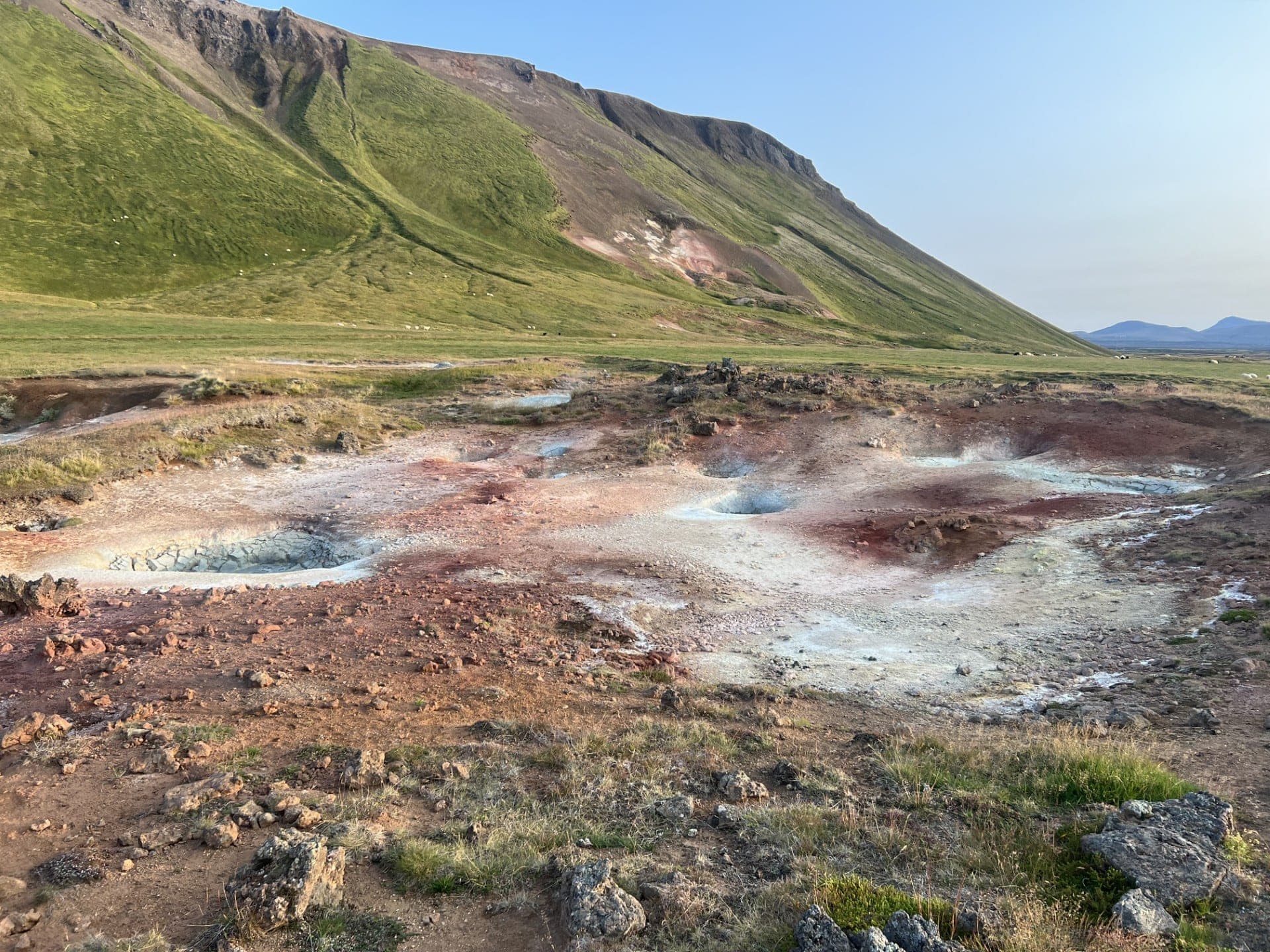
Last week a group of ÍSOR staff headed north on the annual trip to map and monitor surface activity at the geothermal areas that Landsvirkjun utilises in Northeast Iceland, at Námafjall, Krafla and Þeistareykir.
This time it was Finnbogi, Teitur, Alexandra and Gauti who carried out the measurements on behalf of ÍSOR. The weather was kind to the group during the fieldwork, and there was great satisfaction with the trip and with how well the measurements and sampling went.
Monitoring of this kind is intended first and foremost to examine whether utilisation of the geothermal resource affects the surface activity of the geothermal areas. ÍSOR has carried out this monitoring in a comparable form since 2012, so valuable long-term information on the development of the areas has accumulated.
This year the main emphasis was on Þeistareykir. There, carbon dioxide emissions through the surface were measured, steam flow from fumaroles was examined and steam samples were collected from selected fumaroles.
In all, gas flux was measured at close to a thousand points at Þeistareykir. Steam flow was also measured at every accessible fumarole and estimated in the areas that could not be reached. Chemical samples were collected from seven fumaroles.
Steam samples have been collected every year since 2012, and gas flux measurements have been made every one to three years. This year, however, a new element was added to the monitoring, as this is the first time that steam flow from fumaroles has been measured in this way. The results of the measurements are used to detect possible changes in surface activity that could be traced to utilisation of the geothermal resource.
The other main element of ÍSOR's monitoring of the environmental effects of geothermal utilisation for Landsvirkjun is surveillance of the chemical composition of groundwater in the areas affected by the power plants. ÍSOR has carried out that monitoring since around the turn of the century.
The next step in the monitoring is therefore not far off, as sampling for the groundwater surveillance takes place in September.
This year's trip went well in every respect. Good conditions and exceptionally favourable weather made the extensive fieldwork easier, and the group returned home pleased with a successful trip and a good yield from the measurements.