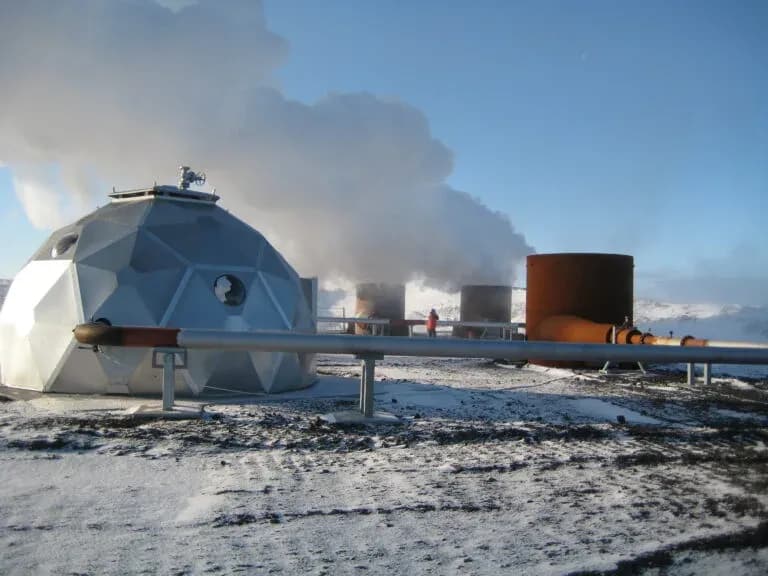

Geothermal energy
Geothermal energy
Geothermal heat is the heat within the Earth that exceeds the temperature prevailing at the surface.
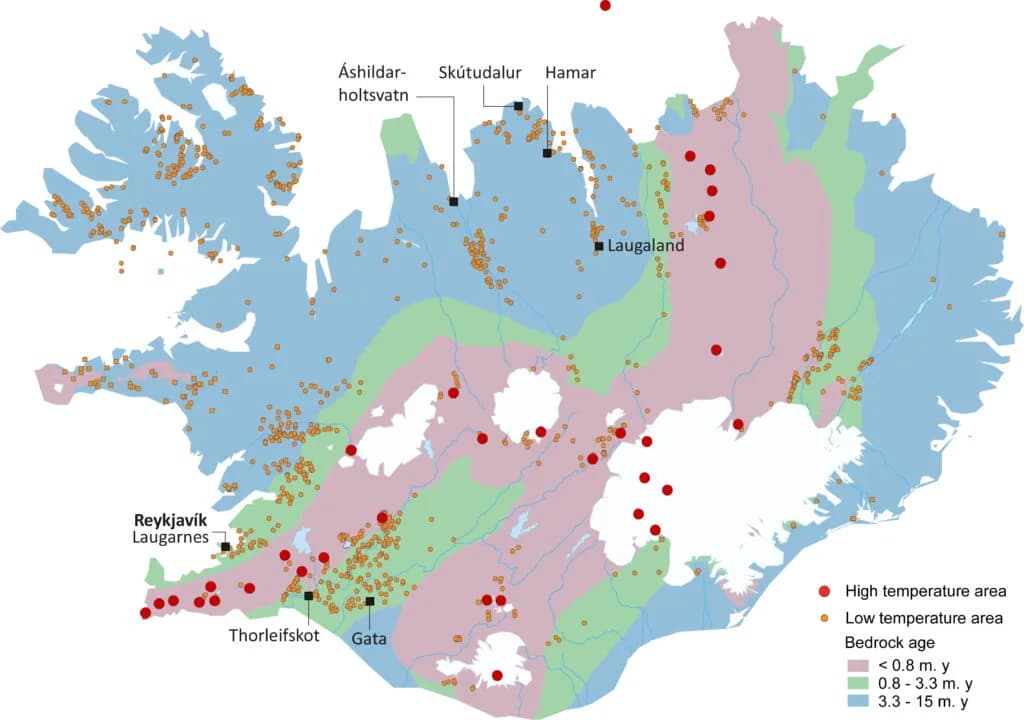
Geothermal systems form where the crust is hot enough and contains enough fractures and water-bearing strata for water to flow through it, carrying heat up from deeper, hotter layers to the surface. These conditions exist in volcanic countries such as Iceland, where tectonic plates meet and are created.
Iceland's crust is relatively hot because its lower part is formed largely from magma intrusions that never reached the surface but solidified on their way up. It is hottest beneath the volcanic and rift zones and cools with distance as the crust grows older.
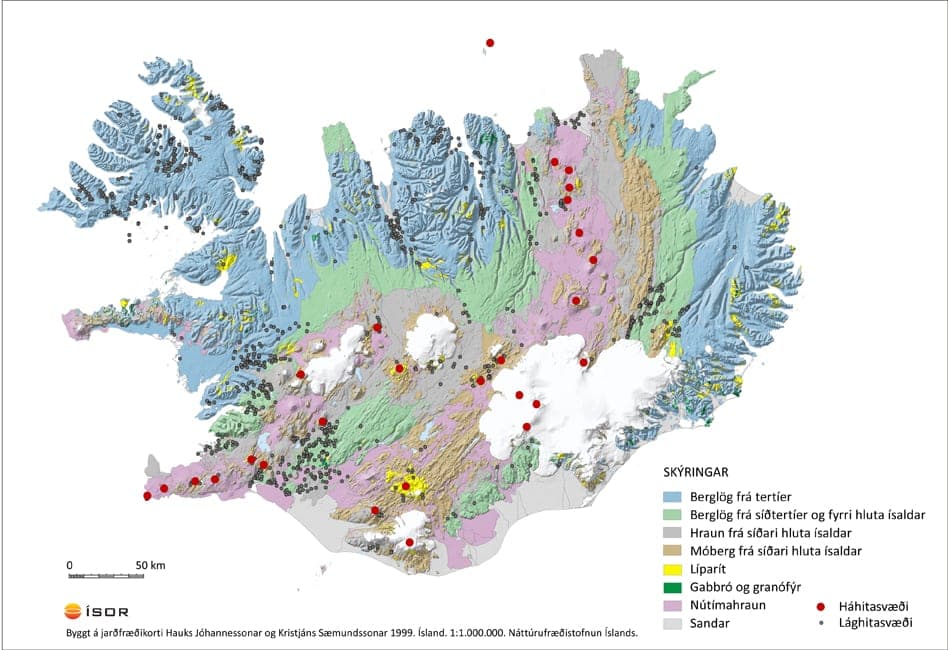
Beneath most of the country's high-temperature areas, all within the volcanic belt, magma intrusions linked to volcanism are thought to be the main heat source. Low-temperature areas lie where the crust is cooler, yet still warm enough to heat water to 50–150°C.
In this section
Geothermal, explained
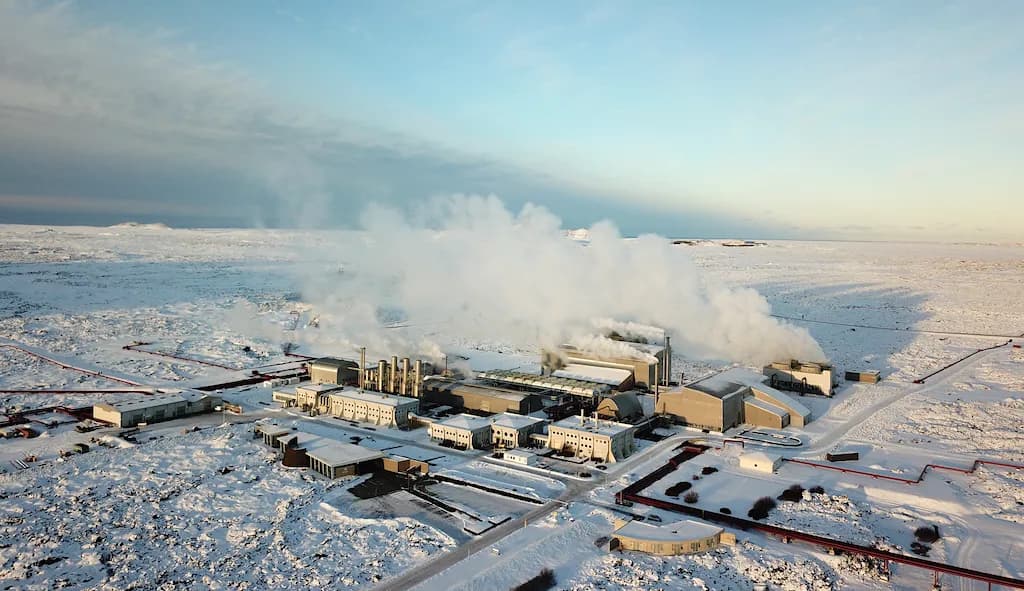
High-temperature areas
In Iceland the high-temperature areas number 25 to 40 depending on how they are counted, of which 5-6 lie beneath glaciers.
Read more- The geothermal area at Reykjanes
- The geothermal area Krýsuvík
- The geothermal area in Brennisteinsfjöll
- Geothermal heat in the Hengill area
- The geothermal area Torfajökull
- Geothermal area in Vonarskarð
- Geothermal heat at Námafjall
- The geothermal area in Krafla
- The geothermal area at Þeistareykir
- Geothermal heat at Hágöngur
- Overview of the geology of the Reykjanes peninsula